
Donkey Kong Bananza’s Lore: A Producer’s Zen-Like Approach to Storytelling









Popular Now
 BeamNG.drive
 Among Us
Gacha Club
Among Us
Gacha Club
 Genshin Impact
 Geometry Dash
 God of War Ragnarök
 Fortnite
 FIFA 23
 Minecraft
 Auto X Drift Racing 3
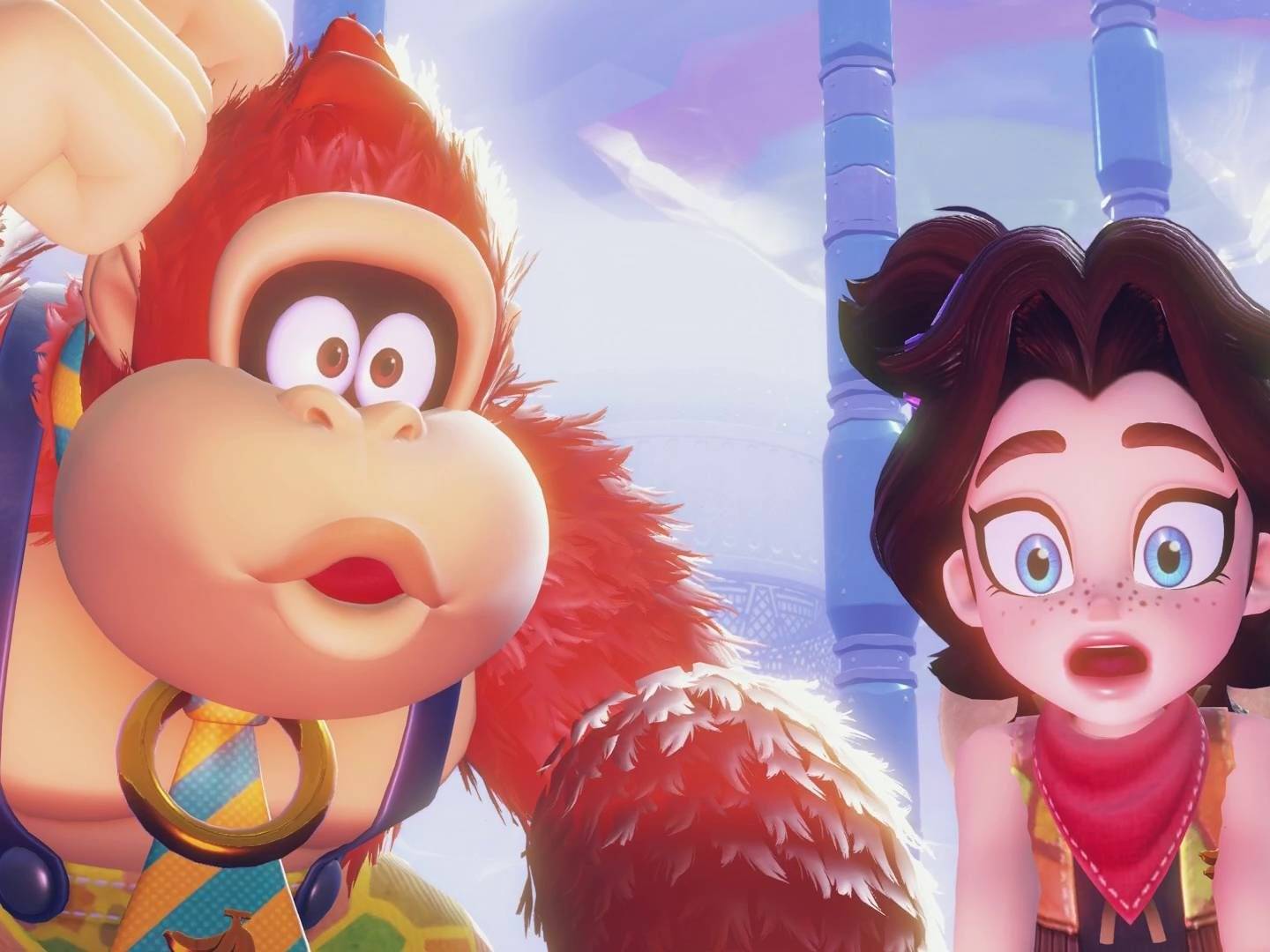 In the vibrant, chaotic, and endlessly creative world of Donkey Kong Bananza, the question of lore and narrative has been a hot topic since the game’s release. The game, which is a spiritual successor to Super Mario Odyssey and the first 3D Donkey Kong platformer in over two decades, introduces a number of new and puzzling story elements. From a reimagined and surprisingly young Pauline to a subterranean world filled with talking rocks and mutated animals, players have been tirelessly trying to piece together a coherent timeline. However, in a recent interview, the game’s producer, Kenta Motokura, delivered a response that has left many fans both intrigued and a little bewildered: “Use your imagination.”
This statement, while seemingly dismissive, is a perfect encapsulation of Nintendo’s unique philosophy on storytelling, especially in its 3D platforming titles. Motokura went on to explain that while there is indeed a “setting” and a backstory the developers had in mind, they intentionally left large gaps for players to fill in themselves. This approach stands in stark contrast to the lore-heavy, narrative-driven games that dominate the market today. It’s a strategy that has defined many of Nintendo’s greatest games, including The Legend of Zelda: Breath of the Wild and Super Mario Odyssey, where the joy of the game comes not from a detailed plot, but from the simple, pure pleasure of exploration and discovery. The “lore” isn’t spoon-fed to the player; it’s something they find on their own, or something they simply invent in their heads. In Donkey Kong Bananza, this is more apparent than ever.
 The Narrative Puzzles of a Voxel World
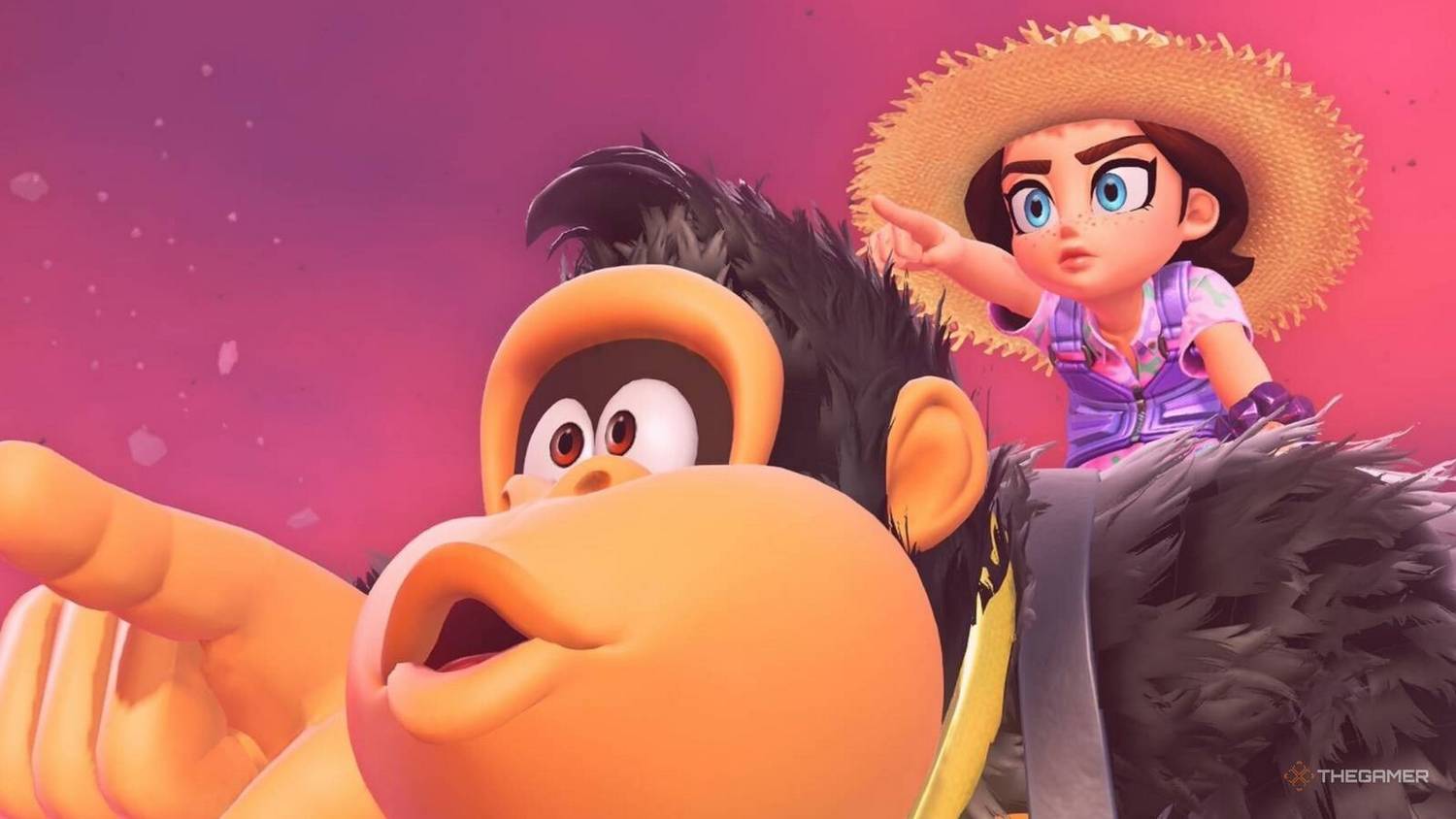
The game’s story, which sees Donkey Kong and a thirteen-year-old Pauline digging into the planet’s core, is a wild ride with many unanswered questions. Why is this Pauline so different from the one in Super Mario Odyssey? Why are there so many distinct and bizarre layers, each with its own biome, inside the planet? Why do some of the animals speak, and why do others not? The game is a constant series of narrative puzzles, and Motokura’s answer implies that the developers don’t necessarily want you to find a single, correct solution. They want you to think about it, to discuss it with your friends, and to create your own head-canon. The game is less of a linear story and more of a sandbox for your imagination.
This “use your imagination” philosophy extends beyond the narrative and into the game’s mechanics. The core gameplay loop of Donkey Kong Bananza revolves around a brilliant new voxel-based destruction mechanic, which allows players to literally tear apart the world around them. This is not just a tool for combat; it’s a tool for discovery. Players can dig into walls to find hidden areas, smash through floors to find new routes, and even create their own shortcuts. The game doesn’t guide you with a linear path; it encourages you to experiment and to find your own way. The lore, in a way, is the same. It is there, in a raw, unrefined form, waiting for you to discover it and shape it into whatever you desire. The game is a triumph of technical prowess, with its destructible environments and solid 60fps performance on the new Nintendo Switch 2, but its most important feature might just be its narrative freedom.
 A Return to First Principles
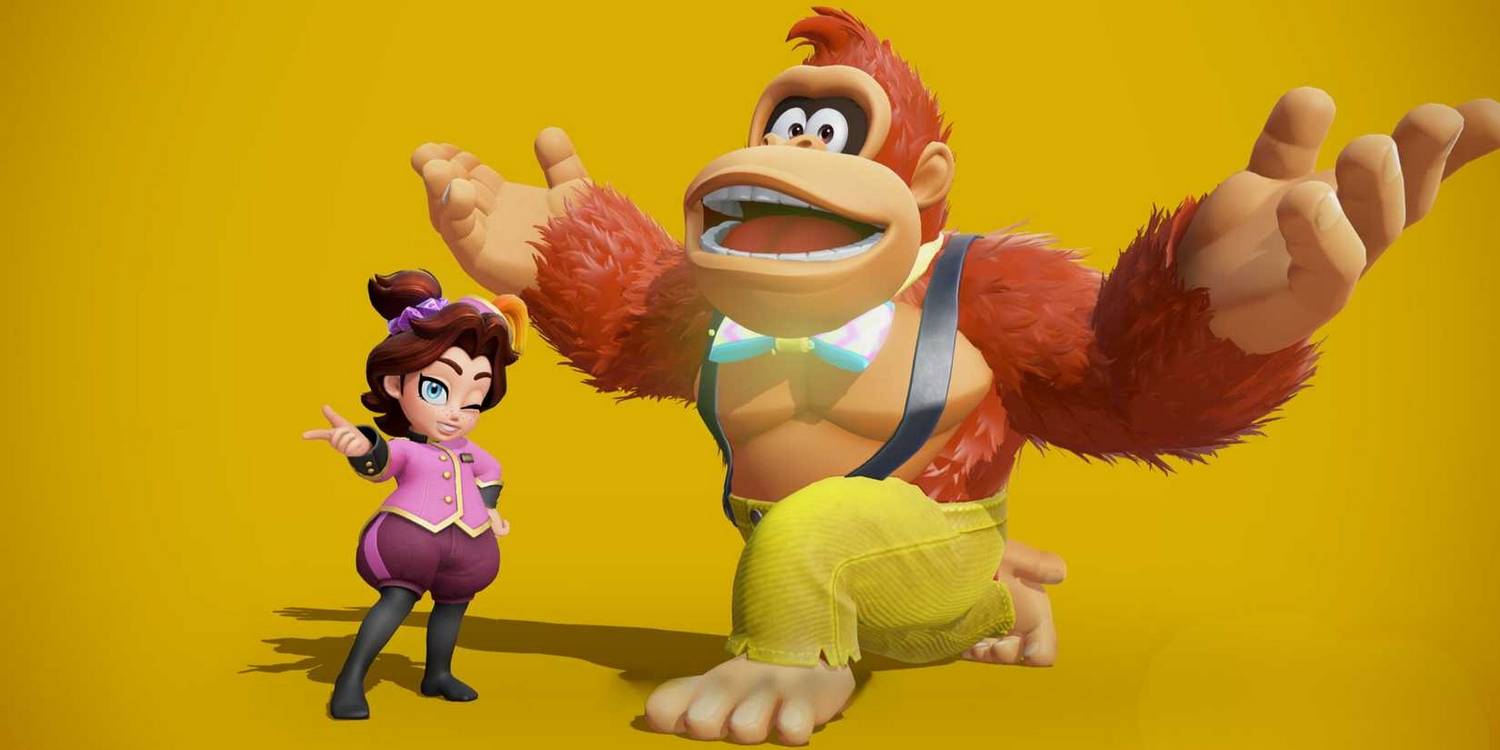
In an age of endless cinematic cutscenes and verbose dialogue, the minimalist storytelling of Donkey Kong Bananza is a welcome change. It’s a return to the first principles of video game design, where the gameplay is the story and the narrative is something that emerges naturally from the player’s actions. Donkey Kong, a character who has rarely, if ever, had a deeply-rooted story, is the perfect vehicle for this philosophy. He is a simple, straightforward hero who wants to get back home, and everything else in the game is simply a means to an end. By giving players the freedom to imagine their own reasons and motivations, the developers have created a world that feels both deeply personal and universally appealing. This is not a game that will win awards for its compelling plot, but it is a game that will be remembered for its pure, unadulterated fun, and for being a rare example of a company trusting its players to be the authors of their own adventure. So, if you’re still wondering about the lore of Donkey Kong Bananza, the producer has already given you the answer. The real lore is the one you invent for yourself.